









THE ASSIGNMENT OF THE DELIVERANCE PROPHET IN NATIONAL GOVERNANCE
PORT MORESBY: The Office of the Prophet is being called back into national focus—not as a symbolic or abstract idea, but as a necessary governing function in times of crisis, transition, and national bondage.
Emerging prophetic teaching grounded in Exodus 14 is drawing a clear line: a Deliverance Prophet is not a concept, not a motivational voice, and not a ceremonial figure. A Deliverance Prophet is one called, appointed, and assigned to deliver a people—and, in certain moments of history, an entire nation.
In this framework, Moses is not simply remembered as a biblical leader, but as the prototype of a prophet operating under national assignment—raised to confront systems, carry divine authority, and execute the deliverance of a people under bondage.
The message is direct: when a nation is trapped—economically, spiritually, or systemically—the Office of the Prophet becomes critical.
Exodus 14 captures such a moment. The people of Israel stood immobilised between the Red Sea and the advancing Egyptian system. Fear spread rapidly. Complaints rose. Leadership pressure intensified.
Yet the defining factor was not the condition of the people—it was the presence of a prophet under assignment.
Moses did not consult public opinion. He did not align with the fear of the people. He responded to instruction.
“Tell the people to move forward.”
According to this teaching, this moment reveals the function of the Deliverance Prophet in governance: to execute divine instruction when human systems fail.
Observers note that the role of the prophet in national life has often been reduced or misunderstood. However, this message repositions the Office as essential—not optional—particularly in seasons where conventional leadership structures reach their limits.
“The Deliverance Prophet stands where systems cannot solve the problem,” one commentator noted. “He carries authority that is not political, but it produces national consequence.”
The Red Sea crossing is presented as more than a miracle event. It is described as a decisive act of separation—cutting a nation off from the system that once held it.
This, according to the teaching, is where prophetic authority intersects with national governance.
The prophet does not merely speak change—he initiates and enforces it.
However, the assignment carries weight.
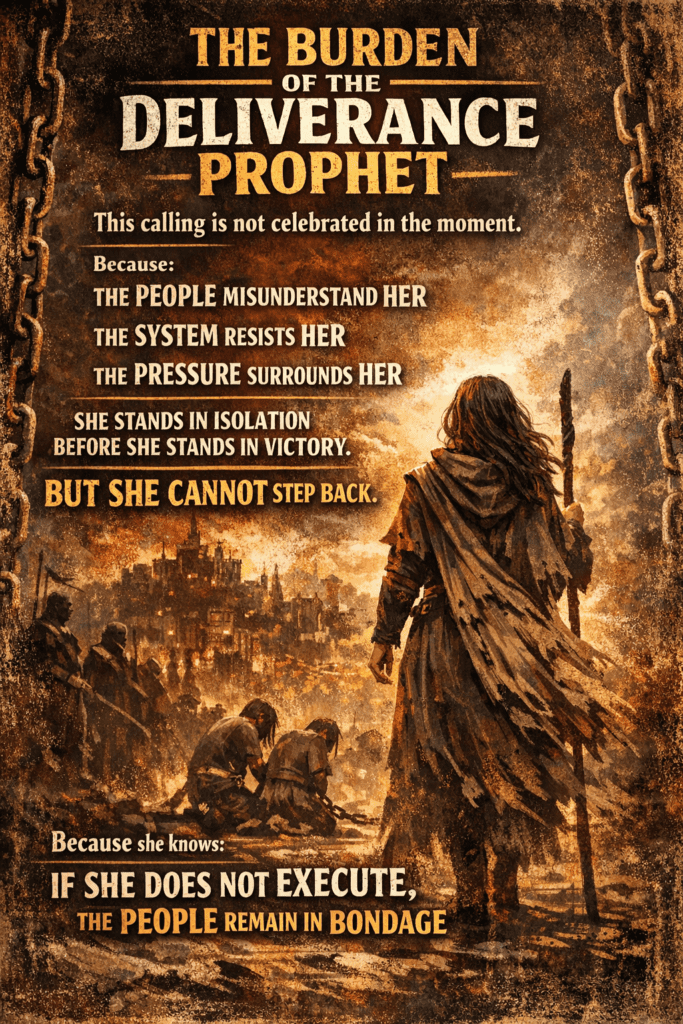
The people may not understand the process. Resistance often intensifies at the point of transition. Systems do not release control easily. Pressure surrounds the assignment.
Yet the prophet cannot retreat.
Because within this framework lies a sobering responsibility: if the assignment is not executed, the people remain in bondage.
As Papua New Guinea continues to navigate complex national challenges, this message is prompting renewed discussion about the place of spiritual authority within leadership structures.
It raises a critical consideration—whether the nation recognises the need for voices that operate beyond policy, beyond politics, and beyond public approval.
Voices that carry instruction.
Voices that stand in moments of national impossibility.
Voices assigned not just to speak—but to deliver.
In Exodus 14, a nation did not move because conditions improved. It moved because a prophet executed the assignment.
For many reflecting on this message today, the implication is clear:
In times of national crisis, the question is not only who leads—
But whether the one called to deliver is recognised, positioned, and allowed to act.
About the Author:

Publisher- Christina Kewa-Swarbrick has over 20 years experience in the Media Industry and over 10 Years in Prophetic Engineering. She's a Holistic Life Solutions Coach, who combines her lived knowledge and experiences and her professional industry knowldege to help others. She's the founder of VISION4040 (PNG) and DBUM Bible Technology, a spiritual mapping system unlocking destiny blueprints . To engage her professional services go to this link: cks.vision4040.com



Recent Comments